Author: Jer McLachlan
Early British and Irish tours to Argentina
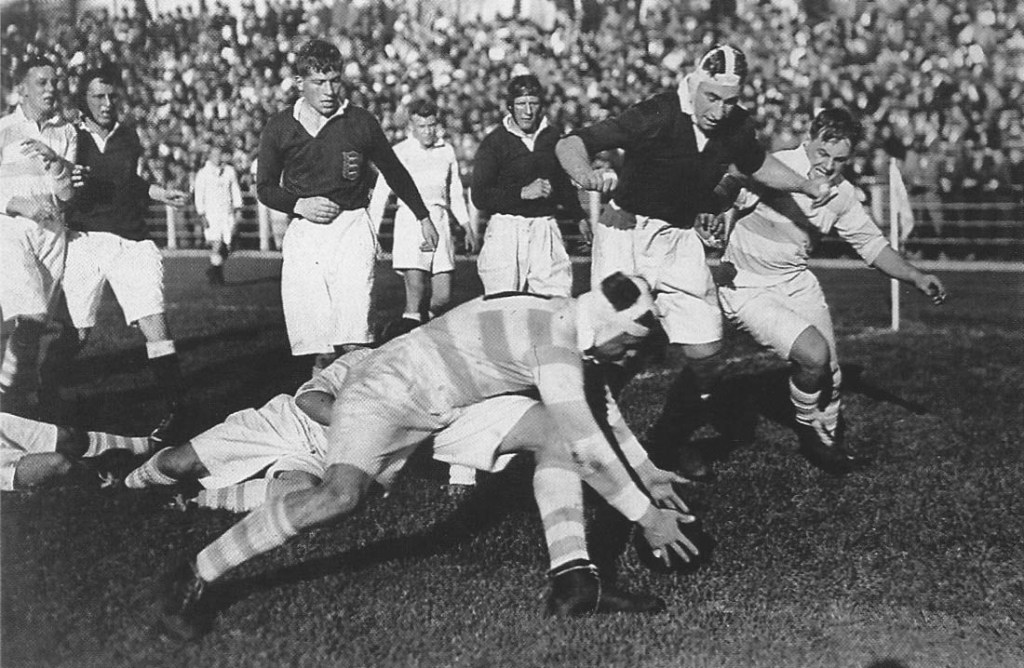
Combined teams from England, Scotland, Wales and Ireland were the first to introduce Test rugby in the Southern Hemisphere when they toured South Africa in 1891 and Australia in 1899. Their mission of spreading the game of rugby union to the Southern Hemisphere was not limited to countries that were members of the British Empire. In 1910, a team consisting of 16 English players and three Scots toured Argentina under the captaincy of John Raphael. Argentina’s first Test match took place on 12 June 1910 and was won 28-3 by the British team. This pioneering British team played only one Test match.
Argentina’s next Test match took place 17 years later, when another team consisting of players from England, Scotland, and Ireland toured Argentina. The 1927 team, captained by the Scot David MacMyn, played 9 games in total during the tour, four of which were Test matches. The British and Irish team won all four tests, each by large margins.
The year 1936 was the last time that a combined British and Irish team visited Argentina. Although Wales won the Home Nations tournament in 1936, the team did not contain any Welsh players but included players from all the other Home Nations. The team was captained by the Englishman Bernard Gadney and won the only Test match played on the 10 game tour, 23-0.
The importance of these tours for the development of Argentina’s rugby is reflected in the fact that of the 11 Test matches that Argentina played prior to 1948, six were against British and Irish teams, with two Tests played against the Junior Springboks and three Tests against Chile.
Tours from Britain and Ireland to Argentina after World War II
Tour by teams containing a mixture of Home Nations players
Although the British and Irish Lions have not visited Argentina since 1936, teams coming from the Home Nations have kept visiting Argentina. However, initially, the matches that these teams played against Argentina were not regarded as official Test matches by the Home Nations. This was due to the fact that the International Rugby Board did not allow member countries of the International Rugby Board to award caps for matches against non-International Board countries. Interestingly, it was only the Home Nations and New Zealand that adhered to this International Rugby Board rule.
At the International Rugby Board meeting in March 1981, this rule was scrapped, and England was the first Home Nation to tour Argentina and award official Test caps for the Tests played against Argentina, starting that same year. The matches in which Argentina awarded official test caps for matches against teams from the Home Nations that toured Argentina before 1981 are set out in the Table below:
| Year | Team | First Test result | Second Test result |
| 1948 | Oxford and Cambridge | 0-17 | 0-39 |
| 1952 | Ireland XV | 3-3 | 0-6 |
| 1956 | Oxford and Cambridge | 6-25 | 3-11 |
| 1965 | Oxford and Cambridge | 19-19 | 3-9 |
| 1968 | Wales XV | 9-5 | 9-9 |
| 1969 | Scotland XV | 20-3 | 3-6 |
| 1970 | Ireland XV | 8-3 | 6-3 |
| 1971 | Oxford and Cambridge | 11-3 | 6-3 |
From the result columns in the Table, it is clear that Argentina found the combined Oxford and Cambridge teams, especially those of 1948 and 1956, to be the toughest opposition that they faced from the Home Nations teams that toured Argentina before 1981.
1948 Oxford and Cambridge tour
In view thereof that Argentina’s last Test match before the War was in 1938, it is not surprising that the first Test team that faced Oxford and Cambridge in 1948 did not have any previous Test match experience. Although Argentina’s first Test team was by no means humiliated, the Argentinian selectors thought it wise to make eight personnel and two positional changes to their second Test team, but surely came to regret this when the team was beaten 0-39. It is interesting to note that seven of the players who made their debut against Oxford and Cambridge in the first Test in 1948 formed the backbone of the team that drew with the Ireland XV in the first Test of 1952. This drawn match was the best result achieved by Argentina against opposition from outside South America in the period from 1948 to 1960.
These seven players also became the most capped players of this era in Argentinian Test rugby. They were:
| Player | Position | Career length | Total Tests |
| Ricardo Giles | Flyhalf | 1948-1952 | 6 |
| Guillermo Ehrman | Scrum half | 1948-1954 | 10 |
| Carlos Swain | Hooker | 1948-1952 | 7 |
| Ricardo Follett | Prop | 1948-1954 | 5 |
| Lucas Glastra | Lock | 1948-1952 | 3 |
| Normando Tompkins | Flank/Lock/Prop | 1948-1952 | 5 |
| Miguel Sarandon | No. 8/Flank | 1948-1954 | 9 |
Ricardo Giles was the Argentinian captain in the first Test in 1948, and although he was left out of the second Test team, he went on to win six caps as fly-half and again captained Argentina against France in 1949 and the Ireland XV in 1952. His halfback partner, scrum half Guillermo Ehrman, was the first Argentinian to win 10 Test caps for Argentina. After the second Test against the Ireland XV in 1952, Giles and Ehrman held the record of six tests as a halfback combination. This record was equalled by Adolfo Etchegaray and Tomas Harris-Smith in 1973 and was only surpassed by Etchegaray and Hugo Porta on 16 October 1976.
Another notable player of that period was W B (Barry) Holmes, who played as a wing for Oxford and Cambridge in the 1948 matches against Argentina, and had a short but extraordinary rugby career. He was born on 6 January 1928 in Argentina to British parents and travelled to Cambridge to study in 1947. He won his Cambridge Blue against Oxford in 1947 and was only 20 years old when he played for Oxford and Cambridge in 1948. He won his second Blue in 1948, playing fullback, and was subsequently chosen in that position for England’s Five Nations campaign in 1949 and played in all four Tests. At the close of the rugby season in England, Holmes returned to Argentina and was selected to play fullback for Argentina in two Tests against France in August and September 1949. His eventful rugby career was unfortunately cut short when he died of dysentery on 10 November 1949.
Oxford and Cambridge fielded the same team to play in the two matches against Argentina in 1948. This team contained two players that have previously played in Test matches for England and five players who subsequently went on to win Test caps for England or Scotland. Arthur Dorward, a scrum half who won his first cap for Scotland in 1950, went on to play in 15 Tests for Scotland. One of the stalwarts of Scotland in the late forties and early fifties was loose forward Peter Kininmonth, who won his first Scottish cap in 1949 and went on to play 21 Tests for Scotland and also captained Scotland. He also played in three Test matches against New Zealand on the British and Irish Lions tour of 1950. Another Oxford and Cambridge player who subsequently captained his country in Test matches was John Kendall-Carpenter, who won his first Test cap for England in 1949 and played in 23 Test matches.
1956 Oxford and Cambridge tour
By the time the second Oxford and Cambridge team went to Argentina in 1956, most of the Argentinian players who faced them in 1948 were no longer in contention to be included in the Argentina Test team. Consequently, it was again a very inexperienced team that was selected to face Oxford and Cambridge in the first Test on 26 August, with 10 players making their debut. After suffering a 6-25 defeat, the selectors again swung the axe and made 10 changes to the team. This appears to have had a beneficial effect as they lost the second Test by a much smaller margin of eight points. However, apart from Elias Gavina, who went on to win 12 caps in total, only two of the debutants in this series went on to win more than five Test caps.
Five members of the Oxford and Cambridge team had been capped by either England or Wales before the tour commenced, and a further three players subsequently went on to win Test caps for England or Wales. In the first match against Argentina, John Currie, the England lock forward, scored 16 points for Oxford and Cambridge, consisting of four penalty goals and two conversions. In the second match against Argentina, David Marques replaced the injured Currie as lock after having played No. 8 in the first match. Having made their debut together in the Five Nations tournament of 1956, Currie and Marques went on to establish a record for England as a lock combination, playing together in 22 consecutive Test matches from 1956 to 1961. Remarkably, this record for England has not yet been bettered.
1965 Oxford and Cambridge tour
When Argentina met Oxford and Cambridge in 1965, they had recently returned from their successful tour to Rhodesia and South Africa, where they recorded their first victory against the Junior Springboks and also acquired the name Pumas from a journalist. Argentina stood at the beginning of an exciting period in their development as a rugby nation in which they faced top-class opposition every season. The team that drew the first Test match 19-19 with Oxford and Cambridge contained several players who became regulars in the team in the following seasons. The captain, Aitor Otano, was the most experienced player in the team with 11 Test caps, and ended his career in 1971 against Oxford and Cambridge after winning a further 15 caps. Hector Silva was at the beginning of a long career in which he captained Argentina and won 23 Test caps, the last being against a World XV in 1980.
The 1965 Oxford and Cambridge team was the first to contain players who represented all four Home Nations in Test matches. The Oxford and Cambridge teams that played in the matches against Argentina contained one player from Scotland, three from England, two from Ireland, and two from Wales. The most famous of these was the iconic Irishman Mike Gibson, who played in 69 Tests for Ireland and 12 Tests for the British and Irish Lions.
A very interesting article, previewing the first Test match, appeared in the newspaper, Crónica, on 11 September 1965. The writer refers in glowing terms to the Pumas’ performance on their South African tour and refers to the fact that Oxford and Cambridge lost against the Argentina B team, which, in his opinion, was far inferior to the Argentina Test team. He ends the article with a confident prediction that Argentina will win the Test match. The Pumas failed to totally deliver on this overly zealous prediction, drawing the first Test 19-all, but the result was still the first in which Argentina avoided defeat against Oxford and Cambridge. The day after the First Test, the same newspaper had a photograph of the match on the front page under the heading “La garra del Puma”, which roughly translates to “The claw of the Puma”. In the paper’s match report, it is mentioned that the match attracted a record crowd of 35,000 people.
1971 Oxford and Cambridge tour
The last tour that an Oxford and Cambridge team made to Argentina ended in a 2-0 series victory for Argentina, representing a complete turnaround from those tours which preceded it. Coincidentally, the tour again took place after Argentina had returned from a successful tour to South Africa, where they shared the Test series with the SA Gazelles, an age-group team which also included capped Springboks. In contrast to the pioneering tours that the Oxford and Cambridge team undertook in 1948 and 1956, Argentina now had a Test team that could compete with the best on home turf.
On the other hand, the Oxford and Cambridge Test teams lacked the star Test players who had accompanied the previous teams to Argentina. The team included six players who played for England, Scotland, or Wales before or after the tour. However, none of these players played more than six Test matches for their country.
Tours by the Home Nations before 1981
The Home Nations XVS that played against Argentina during the four tours from 1952 to 1970 were all much more experienced than the Argentinian Test teams that they faced, and included a host of capped and future British and Irish Lions. However, the fact that these teams lost four and drew two of the eight matches played against Argentina clearly shows that the Home Nations found the conditions in Argentina very challenging.
1952 Ireland tour
The 1952 Irish team that toured Argentina was captained by Des O’Brien, who was also the most experienced Irish Test player in the team with 20 Test caps. However, he missed the first match against Argentina due to injury. Although established Irish players like Jack Kyle, Karl Mullen and Bill McKay did not tour, it was still a very experienced team. Ireland used 17 players in the two matches against Argentina. Of these, 11 had taken part in the 1952 Five Nations tournament, while four others subsequently were capped by Ireland. Only two of the players who played in these matches never won official Test caps for Ireland.
1968 Wales tour
Three of the Welsh players who toured Argentina in 1968 were to become household names in the rugby world in subsequent years. John Dawes, the captain of the team, was also the captain of the 1971 British and Irish Lions, which won everlasting fame as the only Lions team that has ever had a series victory in New Zealand. J P R Williams, whose international career for Wales started in 1969, was also a member of the victorious 1971 Lions team as well as the all-conquering 1974 British and Irish Lions team in South Africa. Phil Bennett, who was still in the shadow of the famous Lions fly-half Barry John at this stage of his career, played in the first match against Argentina. He was John’s successor in the number 10 jersey for the Lions and dazzled the crowds in South Africa in 1974. A fourth player, just starting out in his career, was the flanker Dai Morris, who did not become a Lion but won 34 caps for Wales as a loose forward and held the record as the most capped Welsh flanker for a long time.
Of the 20 players that were used by Wales in the matches against Argentina, eight remained uncapped. Seven of these 20 players participated in the 1968 Five Nations tournament, while two others were capped previously. One of these players, Brian Rees, had toured Argentina with the 1965 Oxford and Cambridge team and played in both matches against Argentina on that tour. In the second match against Argentina on the 1968 tour, Rees was replaced by the very experienced Norman Gale, who had also captained Wales on occasion.
1969 Scotland tour
The pack of forwards that played for the Scotland XV in both matches against Argentina on the 1969 Scotland tour were composed of players who had all made a name for themselves in the Scotland jersey before the tour or did so afterwards. The front row of Ian McLauchlan, Frank Laidlaw and Sandy Carmichael were all British and Irish Lions. Laidlaw played in two Test matches against New Zealand on the 1966 Lions tour and toured New Zealand again in 1971, but was kept out of the Test team by John Pullin. McLauchlan and Carmichael became Lions in 1971 and also toured South Africa with the Lions in 1974. McLauchlan played in all eight Test matches on those tours, but Carmichael never won a Lions Test cap. Carmichael won 50 Test caps for Scotland while McLauclan’s combined Lions and Scottish caps were also 50. Peter Stagg played in three Test matches on the 1968 British and Irish Lions tour of South Africa, while his partner McHarg had a long career for Scotland, which ended in 1979 with 43 Test caps to his name. The back row was composed of the flankers Rodger Arneil and Wilson Lauder, and the No. 8 and captain Jim Telfer. Telfer had been a Lion in 1966 and 1968 when he was joined by Arneil, who was also a replacement on the 1971 British and Irish Lions tour. Lauder’s Scotland Test career started in 1969 and ended in 1977 when he had won 18 Scottish caps.
The backline behind this formidable pack was much less experienced. The only British and Irish Lion was Billy Steele, who won his two Lions Test caps on the 1974 Lions tour. Three of the centres who played in the two matches against Argentina, Ian Murchie, A V Orr, and B Laidlaw, never won a full Test cap for Scotland.
1970 Ireland tour
The Irish team that toured Argentina in 1970 was captained by Tom Kiernan, who had captained the 1968 British and Irish Lions in South Africa. Barry Breshnihan and Willie-John McBride were other established Lions in the team. Sean Lynch won four Lions Test caps in 1971. Michael Hipwell also became a Lion in 1971 but did not play in any of the Test matches. Tom Grace and John Moloney were Lions in 1974 without playing in the Tests. Centre Frank O’Driscoll and hooker John Birch were the only players in the Irish team that never won an official test cap for Ireland.
Tours by the Home Nations after 1981
In the period from 1981 to 2008, when the change in the IRB’s rules meant matches could be classified as Test matches by opposition teams, Argentina was able to win 11 and draw 1 of the 20 Test matches that they played against the Home Nations in Argentina. Two of these wins and the drawn Test match were against England, three wins were against Scotland, and three wins were against Wales. Ireland was not able to win any of the three Test matches that they played on tour to Argentina during this period. However, this successful period for Argentina against the Home Nations in Argentina was followed by a period in which they were only able to win two of the 15 Test matches that they played against the Home Nations in Argentina.
What about the future?
There had been a tentative move to re-establish the pre-war contact between Argentina and the British and Irish Lions when Argentina was invited to play in a warm-up match against the British and Irish Lions before they embarked on their tour to New Zealand in 2005. The match was played on 23 May 2005 in Cardiff and did not fall within the international Test match window, which meant that Argentina was not able to call on all their best players. Many of them were still committed to their clubs in England and France, where their domestic seasons were coming to an end. Despite their lack of star players, Argentina still drew 25-all with the Lions. Nevertheless, the Argentinian Rugby Union had not awarded Test caps for this match, even though the British and Irish Lions were awarded Test caps for the match.
The question is whether the time has not come for the British and Irish Lions to once more resume touring in Argentina and rekindle the spirit of the pre-war Lions and post-war Oxford and Cambridge teams. Argentina has shown their willingness to assist the Lions in 2005 and once again now in 2025. Previous tours to Argentina by teams from the British Isles and Ireland have shown that Argentina is a formidable opponent in their own country. Argentina is ranked fifth in World Rugby’s Men’s rankings, three places above Australia, and there can be little doubt that they will prove to be worthy opponents for the Lions in Argentina. Looking back at the tradition that tours by the British and Irish Lions to Australia and New Zealand had been combined in one tour, it should be possible to make a similar arrangement when the Lions next tour the Southern Hemisphere.
Surely there can be little reason, apart from those related to money-making, why Argentina cannot host matches for the British and Irish Lions before they tour New Zealand, South Africa or Australia? This sentiment is shared by Robert Kitson, writing in the Guardian of 21 June 2025 and referencing the Pumas 28-24 victory the day before, where he remarks that “[m]aybe, one day, the Lions will find it in their hearts – and wallets – to agree to a full tour of South America which, on this evidence, would be a guaranteed crowd pleaser”. The history between Argentina and touring sides from the British Isles is long and storied, and deserves a new chapter, sooner rather than later.

 The Rugby Historian
Leave a comment