Author: Jer McLachlan
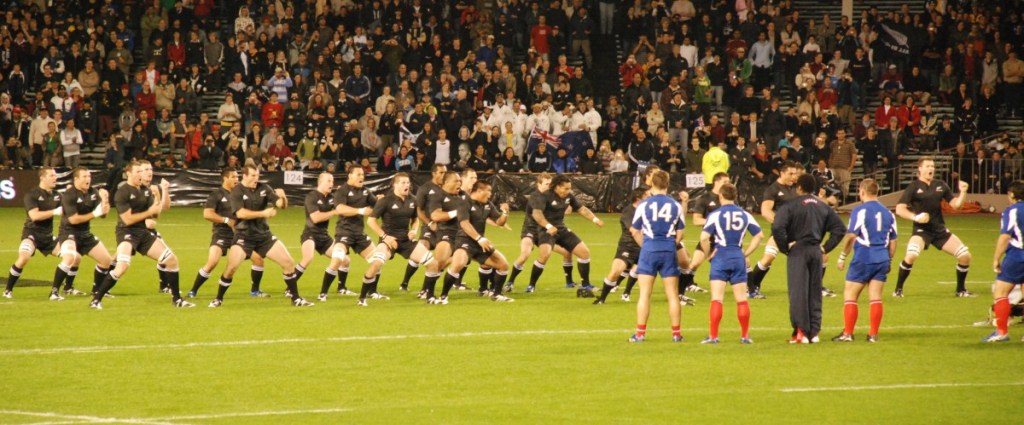
The 2025 Test rugby season will commence for the Southern Hemisphere rugby nations in a little more than a month. Over the years, it has become usual for the four Home Nations, France and Italy to undertake tours to the Southern Hemisphere at the end of the European rugby season. However, this year, due to the visit of the British and Irish Lions to Australia, the four Home Nations will not be touring with full-strength squads. Consequently, outside of the Test series between the Lions and the Wallabies, the Test series between France and New Zealand will likely attract the most attention. In this week’s blog, we delve into the history of this historic rivalry between two of the game’s most entertaining teams, focusing on a few of the noteworthy Test matches played between New Zealand and France in New Zealand.
France’s first victory in New Zealand
France first visited New Zealand in 1961 but had to wait until 14 July 1979 to achieve their first victory over New Zealand on New Zealand soil.
The prospects for success for France in this Test match were not good. In the first Test, New Zealand beat France convincingly, scoring three tries on their way to a 23 points to 9 victory. However, although New Zealand’s forwards’ power proved too much for the French, there were some positives for the French to take from the match. In particular, the French showed that if their forwards could secure good-quality ball, the backs were capable of scoring great tries. In a match report in the Guardian of 9 July 1979, Ian Templeton describes the French try as one of the great tries of modern Test rugby. Notwithstanding this positive note, Templeton remarked that in view of the convincing nature of New Zealand’s victory, France had little chance of squaring the series.
In its 14 July 2019 issue, the French rugby publication Midi Olympique looked back at the historic French victory at Eden Park, Auckland, on 14 July 1979. According to this article, the French camp was having some serious personnel problems before the match. Apart from having to move the experienced tighthead prop, Robert Paparemborde, to the loosehead side and introducing the uncapped Daniel Dubroca as tighthead, the team found itself without a regular No. 8. Consequently, Patrick Salas, normally a lock or prop forward, found himself drafted into the Test team as a No.8 on the morning of the match.
The article also gives an insight into the new approach adopted in training by the French prior to the Test. One of the senior members and vice-captain of the team, fullback Jean-Michele Aguirre, was a gym teacher and took responsibility as an unofficial physical trainer. Just before the match, he took the French three-quarters to a nearby rugby field and drilled them in their moves, an apparently totally new approach to warming up before a Test match. This was after the iconic French captain Jean-Pierre Rives had assumed responsibility for the training sessions in the week before the second Test and had put his men through their paces.
Despite all the upheaval and disruption, the French emerged victorious, clearly taking to heart the lessons they had learnt in the first Test. They disrupted the New Zealand forwards by adopting unorthodox tactics in the line-outs and consequently secured a lot of good ball for their backline. The French players outplayed their New Zealand counterparts and scored four great tries by playing brilliant running rugby. In his match report on the second Test in The Guardian, Ian Templeton described the Test as scintillating rugby seldom seen in Test matches. France won the game by 24 points to 19 and would have won even further if Aguirre’s place kicking had been more accurate. (The full match is available on YouTube, here.)
The Baby Blacks surprise France
France had to wait 15 years before again experiencing victory in New Zealand. During this period, France undertook tours to New Zealand in 1984, 1986, and 1989 and lost all five Test matches played on these tours. The Test France played in New Zealand in 1986 has special significance as it is possibly the only time in the history of Test matches between the two countries in New Zealand that the All Blacks were not the clear favourite to win the game.
In 1986, most of the established All Blacks squad took part in the unsanctioned tour by the New Zealand Cavaliers to South Africa. As part of the fallout of the rebel Cavaliers’ tour, the New Zealand Rugby Football Union prohibited the selection of any Cavalier for the Test against France on 28 June 1986. Consequently, the team selected for the Test was described as one of the weakest and most inexperienced ever to represent New Zealand. The New Zealand XV included 11 players who were winning their first caps. John Kirwan, the most experienced player in the team, had seven caps to his name while the new All Black captain, David Kirk, had played in four Tests. Not surprisingly, this team became known as the “Baby Blacks”. The most famous of the debutants was Sean Fitzpatrick, who later became the All Blacks captain and won 92 caps in a stellar international career spanning 11 years. Other debutant All Blacks who became household names in New Zealand were Joe Stanley, Terry Wright and Mike Brewer.
Remarkably, the All Blacks won the Test 18-9, scoring the only try of the match. In the book The Pine Tree Paradox, Michael Parker refers to this Test as “perhaps the greatest All Black performance ever”. Parker also quotes the All Black captain, David Kirk, as saying that the sense of elation he felt afterwards was probably greater than anything he had ever experienced in his rugby career. The surprising result served as a foreshadowing of what was to come for the All Blacks, as almost exactly a year later, on the 20th of June 1987, they would win the Rugby World Cup, again beating France at Eden Park, 29-9. Kirk was still the captain, and both he and Kirwan scored in the final, while Fitzpatrick and Stanley also started the match.
France’s famous series victory
France’s 1994 tour to Canada and New Zealand did not get off to an auspicious start when the experienced Philippe Sella was sent off in the 53rd minute of the Test against Canada, which France lost 16-18. However, the tour turned out to be one of the greatest in the history of French rugby.
The first Test in New Zealand was played on 26 June 1994 and will be remembered for several reasons. The 14-point winning margin achieved by France in its 22- 8 victory remains the highest winning margin that France has achieved against New Zealand outside of France. While John Kirwan became the most capped All Black by playing in his 59th Test, this achievement was overshadowed by Philippe Sella, who became the first rugby union player to play in 100 Test matches. Sella went on to win a further 11 caps before his career ended in the third/fourth play-off match against England in the 1995 Rugby World Cup. On the other side of the coin, the 19-year-old Jonah Lomu made his debut for New Zealand in this Test match. Although his fame only started to rise in the 1995 Rugby World Cup, his debut is described as “thrilling” in an article in the Guardian of 27 June 1994.
France sealed their first and only Test series win in New Zealand with their 23-20 victory in the second Test a week later. The try that sealed victory for the French two minutes before the end of the match has famously been named “the try from the end of the world” by Philippe Saint-Andre, the French captain at the time, and described by the New Zealand commentators as “one of the all-time great tries”. The flowing, daring play shown by the French team encapsulated and capped off a remarkable tour, the likes of which have seldom been seen since in New Zealand.
Understrength touring teams and poor results
Not counting the two matches France played against New Zealand in New Zealand during the 2011 Rugby World Cup, France has visited New Zealand seven times since 1994. Of the thirteen Tests that they have played on these visits, they have only won one Test, namely the first Test in 2009. The average score for these Test matches is 12.3 points for France and 35.8 for New Zealand. These poor results can partly be ascribed to the fact that the French club season only ends at the beginning of July.
Consequently, France has tended to send understrength teams on their annual Southern Hemisphere tours, a decision which has stood them in good stead over the years. The blooding of young talent on end-of-season tours has deepened the French player pool and unearthed some gems, such as Théo Attissogbe, who made his debut against Argentina last year aged 19, and formed part of this year’s successful Six Nations squad. In the interest of a greater rugby spectacle, however, it must be hoped that Fabien Galthie will this year see his way open to selecting a team that truly represents the power of the Six Nations champions and which may once again revive France’s reputation in New Zealand.
Cover image: Flickr/Stefan Marks

 The Rugby Historian
Leave a comment